Episode Recap: What an Olympian Can Teach Us About Success, Setbacks and Living a Meaningful Life
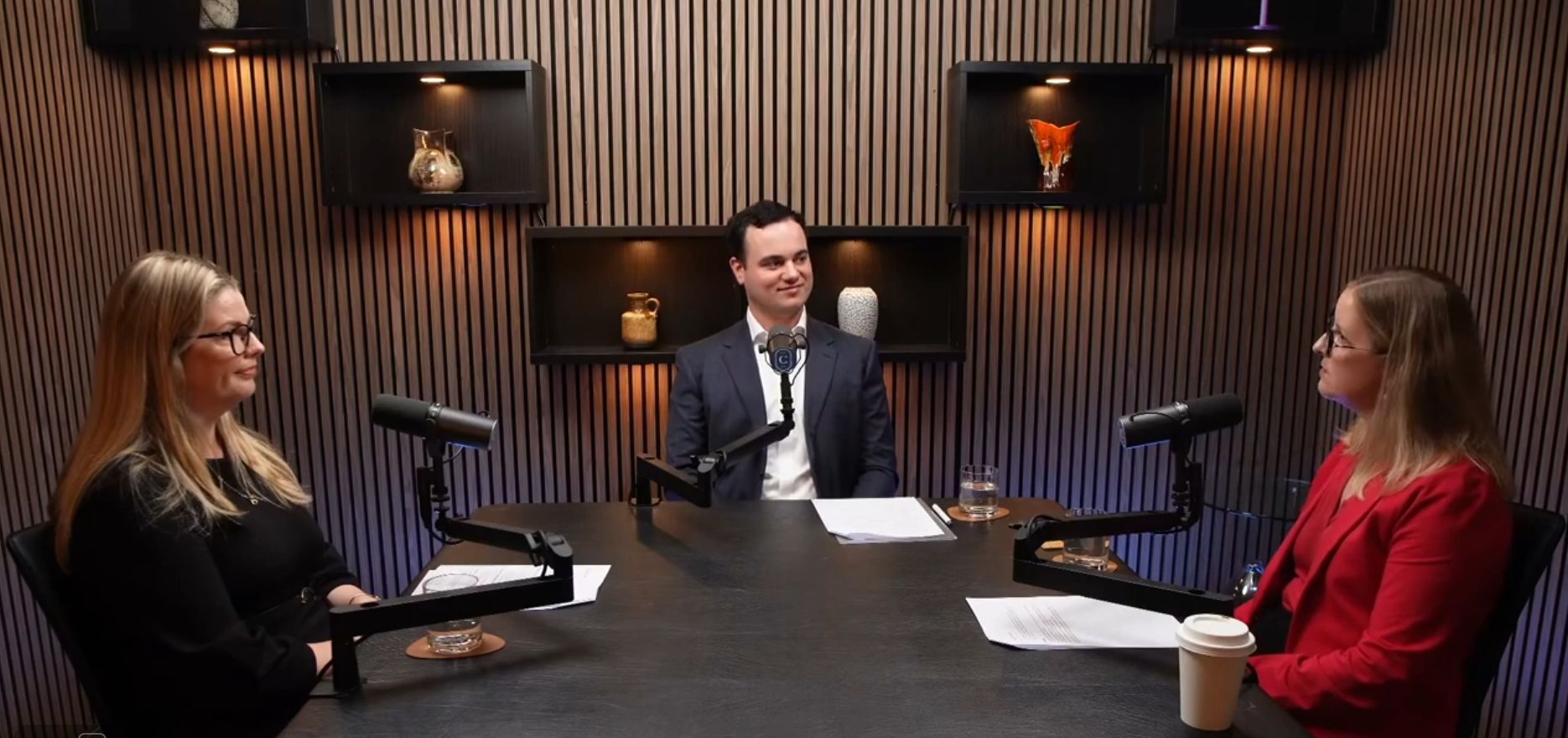
In Episode 80 of The Purposeful Investor Podcast, David Andrew and Aden Wilkins sat down with former Hockeyroo, Olympian, lawyer and leadership coach Fiona Ryan to explore what high performance really looks like.
The conversation covered elite sport, career transitions, serious illness, resilience, values, mindset and the surprisingly strong parallels between successful athletes and successful investors.
One message came through again and again:
Success is rarely about talent alone. It’s about how you respond when things don’t go to plan.
Key Takeaways
- High performers focus on what they can control, not what they cannot.
- Setbacks often become the moments that shape future success.
- Confidence is built through action, not positive thinking.
- Resilience comes from having a plan and trusting the process.
- Values provide a framework for better decision-making.
- Fear of failure often stems from seeking external validation.
- Successful people align their actions with what matters most to them.
- Ambition does not end at retirement. It simply changes shape.
Success Is Not a Straight Line
Looking at Fiona Ryan’s career, it would be easy to focus on the highlights.
An Olympian.
A Commonwealth Games gold medallist.
More than 100 games for the Hockeyroos.
A successful legal career.
A leadership coach and business owner.
But what makes the story compelling are the setbacks along the way. One of the most defining moments came early in her sporting career.
After being selected in the Australian junior squad in Year 11, Fiona expected to continue progressing. Instead, she was dropped from the squad entirely the following year.
For many people, that would have been the end of the dream. For Fiona, it became the beginning of something more important.
The Power of Focusing on What You Can Control
When disappointment strikes, it is easy to look outward. The selectors got it wrong. The coach has favourites. The system is unfair. The circumstances are against me.
Fiona made a different choice. Rather than focusing on factors outside her control, she focused on areas where she could improve. She knew the team heading to the Junior World Cup would need to be exceptionally fit. So, she became fitter. She focused on improving every training session. She showed up with a clear intention every day. Six months later, she earned her place in the Junior World Cup squad. That lesson has remained with her ever since. When circumstances become challenging, high performers ask:
What can I control right now?
Why Plans Matter More Than Motivation
A theme that came up repeatedly throughout the conversation was the importance of having a plan. Not just a long-term plan. A daily plan. A training session plan. A process. A framework. A way of navigating uncertainty. When Fiona was working her way back into national selection, every training session had a purpose. Every session represented an opportunity for growth. The same principle applies to investing. Successful investors are rarely making decisions based on emotion or headlines. They are working from a plan. The plan creates stability when circumstances become uncertain. It provides confidence when outcomes cannot be guaranteed. And most importantly, it helps people continue taking action when motivation inevitably fluctuates.
Confidence Is Built, Not Found
Many people believe confidence comes first. They assume they need to feel confident before taking action. Fiona’s experience suggests the opposite. Confidence is often the result of doing difficult things repeatedly. Every challenge overcome becomes evidence. Every setback survived becomes proof. Every uncomfortable conversation, difficult decision or stretch opportunity reinforces a simple belief:
I can handle hard things.
That belief then becomes the foundation for future confidence. The lesson is important because many people spend years waiting to feel ready. High performers often start before they feel ready and develop confidence along the way.
A Commonwealth Gold Medal and an Olympic Dream
Despite early setbacks, Fiona eventually represented Australia at the highest level. She won Commonwealth Games gold and achieved her lifelong goal of becoming an Olympian. But even those achievements were not straightforward.
Leading into the London Olympics, she suffered a devastating collarbone injury just weeks before selection. The injury required major surgery. The timing could hardly have been worse. Yet again, the focus returned to what she could control. Rehabilitation. Recovery. Preparation. Mindset.
The result was Olympic selection and the opportunity to represent Australia on the world’s biggest sporting stage. What stands out in Fiona’s story is not the absence of obstacles. It is the consistent response to them.
When Life Delivers Bigger Challenges
Sporting setbacks prepare people for many things. Life-changing health challenges are different. Shortly after retiring from elite hockey and beginning a legal career, Fiona was diagnosed with Hodgkin lymphoma. Chemotherapy followed. The future suddenly looked uncertain. Years later, after Fiona had recovered and started a family, her husband John received his own diagnosis: stage four bowel cancer.
Few experiences test resilience more severely than those moments. Yet the mindset principles remained the same. Focus on what can be controlled. Stay connected to the future. Keep moving forward. Rather than becoming consumed by worst-case scenarios, Fiona and John remained focused on possibility.
Not blind optimism. Not denial. A deliberate choice about where to direct their attention and energy.
Today, John is healthy and thriving.
The Difference Between Ego and Character
One of the most powerful parts of the conversation centred around the difference between ego and character. According to Fiona, many fears stem from an “ego mindset”. An ego mindset relies heavily on external validation. What do people think of me? Did I impress them? What if I fail? What if I make a mistake? A character mindset looks very different. It is driven internally. It is based on values.
It asks different questions:
Who am I?
What do I stand for?
What matters most to me?
How do I bring my best self to this situation?
The distinction is important because fear of failure often grows when self-worth becomes connected to external outcomes.
Character-driven people focus on how they show up rather than how they are judged.
Why Values Matter More Than Goals
The discussion also explored the role of values in high performance. Goals are useful. But values are bigger. Goals can be achieved.
Values continue guiding behaviour long after goals have been reached. Fiona’s personal values include being daring, playful and loving.
Those values influence her thinking, decision-making and behaviour every day. When values align with actions, something powerful happens. Life feels meaningful. Decisions become clearer. Progress feels more natural.
As Fiona explained:
“Happiness is the outcome of success, and success is when our values align with our actions.”
It is a simple idea.
But it changes everything.
Ambition Doesn’t Retire
One of the final topics discussed was ambition. Many people assume ambition belongs only to careers, business or elite sport.
Fiona sees it differently. Ambition is not about titles, medals or financial outcomes.
It is about continuing to live with purpose. About continuing to grow.
About continuing to align actions with values. That doesn’t stop at retirement.
It doesn’t stop when children leave home. It doesn’t stop when careers change.
It simply evolves. The people who thrive in retirement are often those who continue pursuing things that matter to them.
They remain curious.
Connected.
Purposeful.
Engaged.
The Bottom Line
Success rarely follows a straight line. High performers experience setbacks, disappointments, uncertainty and failure just like everyone else. The difference is often how they respond. They focus on what they can control. They remain committed to a process. They continue showing up when circumstances become difficult. They stay connected to their values. And they trust that progress comes from consistent action over time. Whether in elite sport, business, investing or life, the lesson is the same: Success leaves clues. And more often than not, those clues point towards resilience, purpose and the courage to keep moving forward when things get hard.
Watch the full episode on the Purposeful Investor YouTube channel.