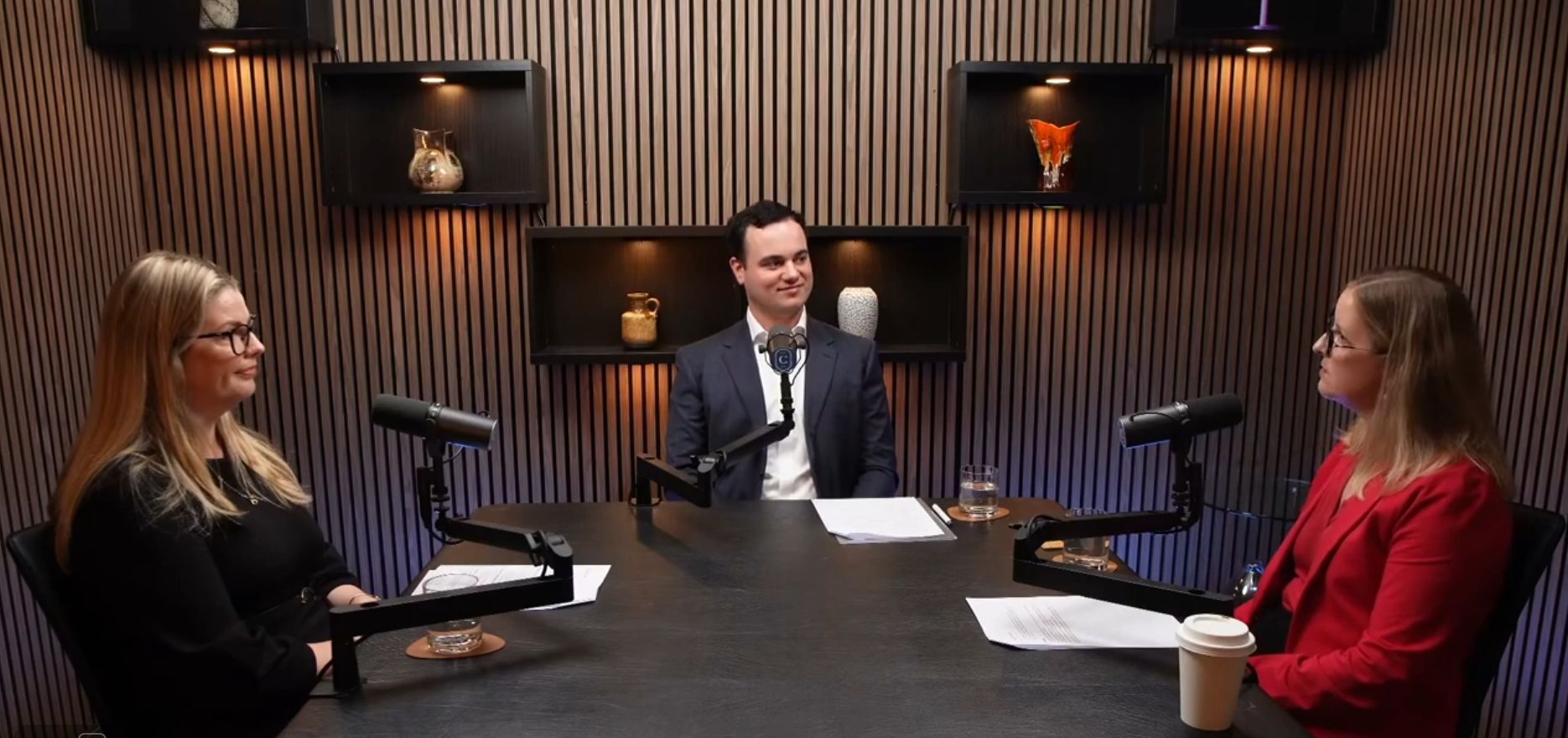
In Episode 77 of The Purposeful Investor Podcast, David Andrew and Aden Wilkins sat down with Morgan Solomon, Founding Director of Solomon Hollett Lawyers, to understand exactly why so many estate plans fail, and what successful families do differently. Read the recap below.
Key Takeaways
- Approximately 35 to 40 per cent of Western Australians die without a will. This is called dying intestate.
- A further 10 per cent do not know whether they have a will. Another 14 per cent have a will that is at least 10 years out of date.
- In total, roughly 60 per cent of Western Australians are set up for a poor or catastrophic outcome when their wealth must transfer.
- Family provision claims are the fastest-growing area of dispute in the WA Supreme Court, driven by larger estates, blended families and greater public awareness.
- Courts decide based on need, not fairness. An equal split between adult children may be overridden if one child has significantly greater financial need.
- Wills must keep pace with life. A will written 10 years ago may not reflect your current family, assets or intentions.
- Successful families take action and have deliberate conversations. Both are essential. Neither alone is sufficient.
- Wills and estate planning works best when coordinated across your financial adviser, accountant, succession lawyer and insurance adviser.
The Scale of What Is at Stake
Australia is in the middle of a wealth transfer of extraordinary scale. Baby boomers and the silent generation together hold approximately 70 per cent of the nation’s wealth. All of it must eventually change hands, through wills, trusts, superannuation funds and family business structures, to the next generation.
Most of it will not transition smoothly.
Australia’s baby boomers and the silent generation (broadly, those born before the mid-1960s) make up roughly 27 per cent of the population. They hold approximately 70 per cent of the nation’s wealth. It must change hands over the next 20 years.
| What the numbers show | Figure |
| Share of population (boomers and silent generation) | ~27% |
| Share of national wealth held by this group | ~70% |
| Estimated total wealth to be transferred | $5.4 trillion |
| Approximate WA residents surveyed (Solomon Hollett 2025 State of Play) | ~1,000 |
As Morgan puts it: death has a 100 per cent strike rate. This wealth must change hands. The question is whether it transfers according to the wishes of those who built it, or according to a rigid formula decided by courts.
Why 60 Per Cent Are at Risk
Solomon Hollett surveyed just under a thousand Western Australians in 2025 for their 2025 Inheritance State of Play Report. The numbers are striking.
| Category | Estimated proportion | What this means |
| Die without a will (intestate) | 35 to 40% | Assets divided by a rigid legislative formula, regardless of wishes |
| Do not know if they have a will | ~10% | No certainty their estate is covered |
| Have a will at least 10 years old | ~14% | High risk of being out of step with current family, assets and law |
| Total at significant risk | ~60% | Poor to catastrophic outcome likely when wealth transfers |
The pattern is consistent with broader Australian data on wills and estate planning. The scale of under preparation is not unique to WA.
Morgan Solomon is a recognised succession law specialist with more than 25 years of experience. He is regularly cited in Doyle’s Guide as one of WA’s leading practitioners in this area. What he describes is not a niche problem for the very wealthy. It is a structural failure happening across families of every size, every background and every level of assets.
What Happens When You Die Without a Will
Dying without a will is called dying intestate. When this happens, the distribution of your assets is not guided by your wishes. It is dictated by legislation in your state or territory.
In Western Australia, that formula allocates assets among surviving family members according to a set hierarchy. The practical result is often not what anyone would have chosen.
Morgan gives a direct example. A person dies leaving a spouse and two young children. Without a will, the legislation may allocate a significant portion of assets to the children, leaving the spouse with less than she needs. She then has to challenge her own children in the Supreme Court to secure the provision she requires.
Because the children are minors, they cannot act for themselves. Independent trustees and guardians must be appointed. The family takes on legal costs that can run to hundreds of thousands of dollars. The process takes years.
Nobody in that family wanted to be at war. Nobody chose that outcome. It happened because there was no plan.
Important note: Intestacy rules vary by state and territory. This article draws on Western Australian examples. Speak to a qualified succession lawyer in your state before making any decisions about your estate.
Blended Families: When Obligations Conflict
If you have a blended family, your estate planning is already complex. There is no avoiding that.
The core tension: most people want to provide for a new spouse while also ensuring their children from a previous relationship are looked after. Finding the right balance is rarely straightforward, and it becomes harder still when the estate is not large enough to fully meet everyone’s legitimate needs.
Morgan frames it directly. You cannot serve two masters, and yet you have to find a way. You have to balance your obligations to your new partner, your children from your first relationship, and in some cases children from your new relationship as well. Each has a different claim. Each has a different level of need.
This complexity is reflected in the court data. Family provision claims (applications by eligible people who believe they were not adequately provided for) are the fastest-growing area of dispute in the WA Supreme Court. The combination of rising property values, more complex family structures and greater public awareness of these rights has driven a significant increase in both the volume and the scale of these cases.
Family Provision Claims: What the Court Actually Considers
A family provision claim is not about fairness. There is no concept of equal division enshrined in Australian succession law. The court’s test is need.
The question is not whether a beneficiary received their equal share. The question is whether adequate provision was made for a person who has a moral claim on the estate and a genuine financial need.
| Scenario | Likely outcome in a family provision claim |
| Surviving spouse with no independent income, entirely dependent on the estate | Very strong claim. Court is likely to award significant provision. |
| Surviving spouse who is independently wealthy with no financial need | Weaker claim. Financial need is not established. |
| Adult child in genuine financial hardship with no stable income or assets | Strong claim, even if the relationship with the deceased was difficult |
| Adult child who is financially successful and self-sufficient | Weaker claim. Financial need is not established. |
| Estranged adult child with genuine financial need | Estrangement is relevant but not determinative. Claim may still succeed. |
| Adult children from a first marriage when new spouse receives most of the estate | Depends on their own financial circumstances and level of need |
Morgan explains that a child estranged from a parent for 20 years may still walk in after the will is read and make a successful family provision claim if they can demonstrate genuine financial need.
This is not a loophole. It is how the law is designed. For people making wills, the implication is clear: ignoring a financially vulnerable family member does not protect the estate from a claim. It may create one.
The Family Farm and Business: A Different Kind of Risk
Estate planning becomes significantly more complex when the asset at the centre of it is illiquid, such as a farm or family business.
The classic scenario: one of several adult children works a farm for 30 or 40 years. They earn modestly. They accumulate little superannuation and few assets of their own. Their efforts have kept the farm running and often funded their siblings’ education. They have done all of this in reliance on a promise: one day, all of this will be yours.
Then something changes. A falling-out. A shift in the parent’s intentions. A death with a will that does not reflect the promise made decades earlier.
If the dispute arises during the parent’s lifetime, the working child may bring a legal claim called a proprietary or promissory estoppel claim, which essentially argues that they relied on a promise to their significant detriment and that the court should enforce it. If the parent has died, the claim is brought against the estate.
These cases are complex and expensive. Farm and business values in WA have risen significantly over recent decades. A farm once worth $5 million may now be worth $50 million. The stakes are enormous and the court process can take years.
The same dynamic applies directly to family businesses. A child who has given decades of work in reliance on a succession promise is in a vulnerable legal position if that promise was never properly documented and made enforceable.
What Successful Families Do Differently
Morgan’s view is clear: the families who transition wealth successfully are not simply those with better-drafted documents. They are the ones who take deliberate action and have honest conversations.
What these families consistently do:
- They take action early. They identify that this needs to be addressed and they do it. The documents come at the end of a thinking process, not the beginning.
- They have deliberate conversations. Not passing comments, but structured discussions with adult children about how the estate is intended to work, the reasoning behind decisions, and what the expectations are on both sides.
- They do not assume they know what their children want. A parent may assume the eldest will want to inherit the family business. The child may have entirely different plans. Asking first changes everything.
- They update their estate plan regularly.A good estate plan is not completed once and filed away. It is reviewed at each major life event and at least annually.
- They involve the right professional team. The financial adviser, accountant, succession lawyer and insurance adviser each hold a different piece of the picture. No single professional has the full view.
- They think about the whole family group. In some families, parents fund estate planning across the entire family structure, including adult children and grandchildren, ensuring there are no weak points in the succession chain.
Is Your Will Outdated? Warning Signs to Act On
The bottom drawer problem is common. A will written years ago sits there, and the implicit assumption is that it is still doing its job. It may not be.
Review your will if any of the following apply:
- A major change in assets. A property, business or investment portfolio worth $1 million a decade ago may be worth significantly more today. The intended distribution may no longer reflect your actual wishes or needs.
- A change in family structure. A marriage, separation, divorce, remarriage, new children or a stepchild relationship creates obligations that an older will may not address.
- A change in a beneficiary’s circumstances. A child who was financially comfortable when the will was drafted may now have significant financial need, or vice versa.
- Superannuation and trust arrangements not aligned with the will. Superannuation does not automatically form part of your estate. Without a valid Binding Death Benefit Nomination, the fund trustee has discretion over where it goes. Trusts established in recent years may also fall outside the will entirely.
- The will is more than 10 years old. Even if nothing obvious has changed, family dynamics, asset values and legislative settings shift over time. A review is almost always warranted.
At Capital Partners, estate planning is on the agenda every year with every client. It is not a set-and-forget item. It is an active part of a complete financial plan.
The Adviser Team: Who Needs to Be Involved
Effective estate planning in Australia, particularly for families with meaningful assets, requires coordination across multiple professionals. No single adviser holds the full picture.
The key team:
- Financial adviser: coordinates the overall strategy, understands the full financial position and family goals, identifies when a review is needed, and ensures changes in assets or family structure are reflected in the plan
- Succession lawyer: drafts the will, testamentary trusts (trusts established through a will that come into effect on death) and enduring powers of attorney; stress-tests the plan against the risk of family provision claims
- Accountant: advises on the tax consequences of different asset distributions, including capital gains tax on deceased estates and superannuation tax for non-dependant beneficiaries
- Insurance adviser: ensures life insurance and income protection are appropriately structured and directed; particularly important for younger families and business owners with key person exposure
Morgan is direct about the value of this coordination. The financial adviser hears things about family dynamics, concerns about specific children, and financial circumstances that are directly relevant to the estate plan. Feeding that knowledge into the legal process significantly improves the outcome.
When the whole team is involved, from the earliest planning stage, there are no surprises.
Frequently Asked Questions
What happens if I die without a will in Australia?
If you die without a valid will, you are said to have died intestate. Your assets are distributed according to a formula set by the legislation in your state or territory, not according to your personal wishes. In most Australian states, assets pass first to a surviving spouse, then to children, with proportions set by the legislation. The result may not reflect what you would have chosen, and it can require court applications that cost significant time and money. Laws vary by state. Speak to a qualified succession lawyer to understand the rules that apply in your circumstances.
Who can make a family provision claim against an estate?
The people eligible to bring a family provision claim vary by state legislation, but typically include a surviving spouse, de facto partner, children (including stepchildren and those treated as children of the deceased), and in some states parents or siblings who were financially dependent on the deceased. The key test is whether adequate provision was made for a person who had a moral claim on the estate. It is not about whether the distribution was equal. It is about whether it was adequate for those with genuine financial need.
Can I leave my entire estate to whoever I choose?
Yes, with an important qualification. You have the legal right to leave your estate to anyone you choose, including organisations and individuals who are not family members. However, if you fail to make adequate provision for certain family members who have a moral claim on your estate and genuine financial need, a court may override your will and require additional provision to be made. This is the basis of family provision claims in Australian succession law.
How often should I review my will and estate plan?
At a minimum, your will and estate plan should be reviewed every three to five years, and immediately after any major life event: marriage, separation, divorce, the birth of a child, a significant change in assets, or the death of a beneficiary or executor named in the will. Superannuation nominations, testamentary trust arrangements, and enduring powers of attorney should be checked at the same time. At Capital Partners, estate planning is on the agenda with every client every year.
Is my superannuation covered by my will?
No. Superannuation is held in trust by a superannuation fund and does not automatically form part of your estate. The fund trustee controls where it goes unless you have a valid Binding Death Benefit Nomination directing the payment to specific beneficiaries or to your estate. Without a current binding nomination, the trustee has discretion. Non-dependant beneficiaries such as adult children may also face up to 17 per cent tax on the taxable component of a superannuation payment, which makes this one of the most important and most overlooked steps in wills and estate planning.
What is the difference between a will and an estate plan?
A will is a legal document that sets out how you want your assets distributed after your death. An estate plan is the broader strategy that includes the will, superannuation nominations, testamentary trusts, enduring powers of attorney, life insurance direction, business succession arrangements and any other structures that affect how your wealth transfers. A will is one component of a complete estate plan. Having a will does not mean you have a full estate plan. For families with complex assets, business interests or blended family structures, a complete and coordinated approach to estate planning in Australia is essential.
Listen to the full conversation with Morgan Solomon in Episode 77 of The Purposeful Investor Podcast.
Watch the full episode on the Purposeful Investor YouTube channel.